Flight 1
Day 124 after early sowing
- Temperature
- 11–21 °C
- Rain
- No rain
- Wind
- up to 19 km/h, gusts 36from NNW
- Cloud cover
- 19% cloud
UAV-based multispectral image collection at experimental field in Turkey.
How Çukurova University prepared the trial field in Adana, from choosing the site to the first drone images:
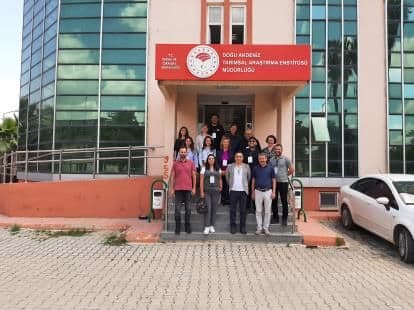
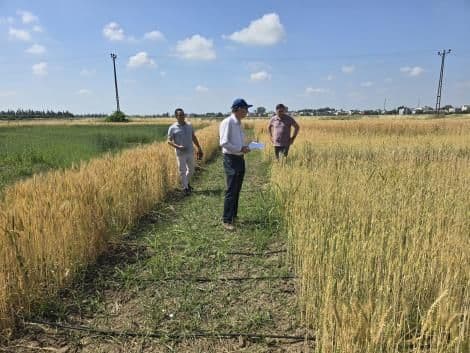
The project team visited the Eastern Mediterranean Agricultural Research Center in Adana, presented the project, and toured the institute's facilities and experimental fields.
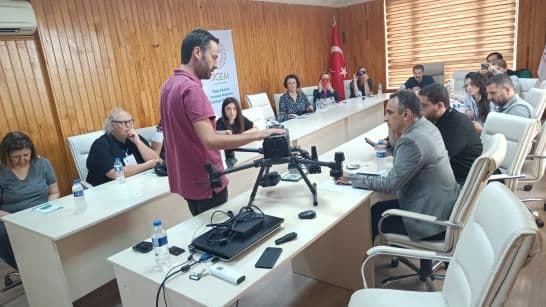
The Çukurova team planned the experiment design, crop, logistics and image acquisition, and chose a site of about one hectare: free of flight restrictions, with calm clear weather, easy access, suitable soil, an irrigation system and protection from damage.
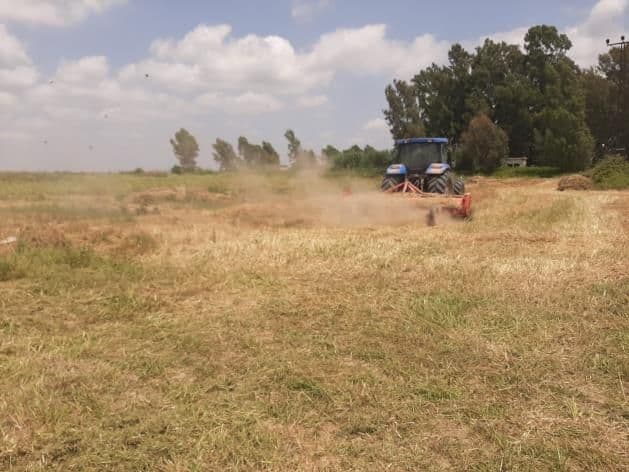
The land was prepared and irrigated to create ideal soil conditions. Controlling the soil's nitrogen was found to be necessary before the trial.
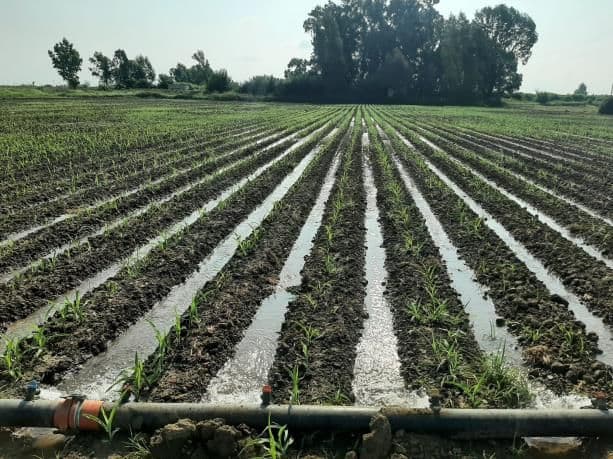
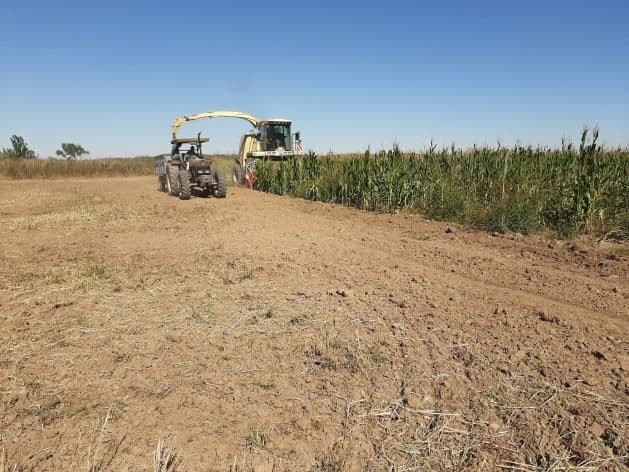
Silage corn was planted on 7 August 2024 to take up the nitrogen left by the previous crop, and was irrigated and fertilized over the summer.
–
The corn was harvested on 23 October 2024; by 31 October the soil was ideal for sowing the target crop, wheat.
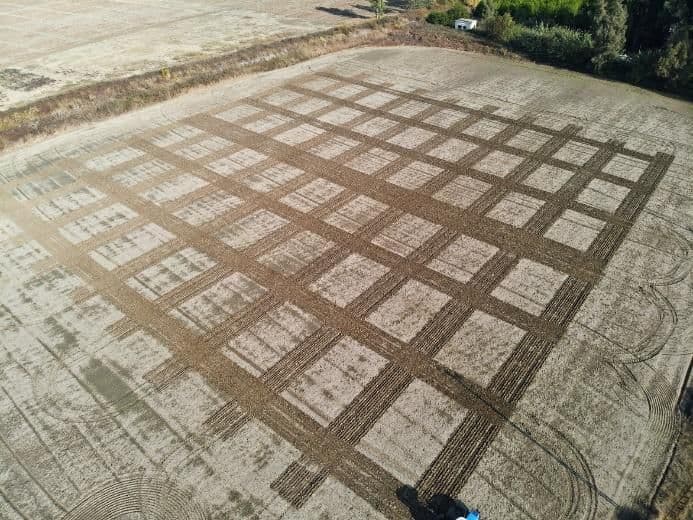
On a 90 × 90 m area, two blocks of 27 plots (6 × 10 m, 3 m apart, with a 3 m buffer) were laid out for an early and a late crop. Nitrogen was applied at 0, 10 or 20 g/m² and irrigation at 0, 50 or 100%. The early wheat was sown on 12 December 2024.
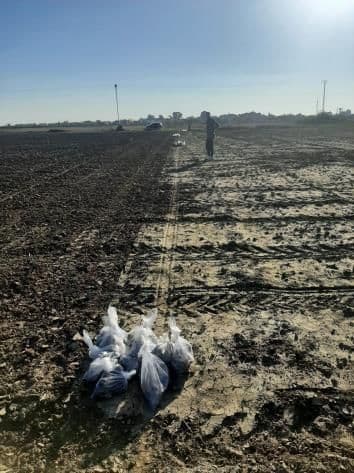
Soil samples were taken from the field for laboratory analysis.
The first aerial images showed different shades of green across the plots, reflecting the nitrogen and irrigation treatments. The late-crop plots were still bare.
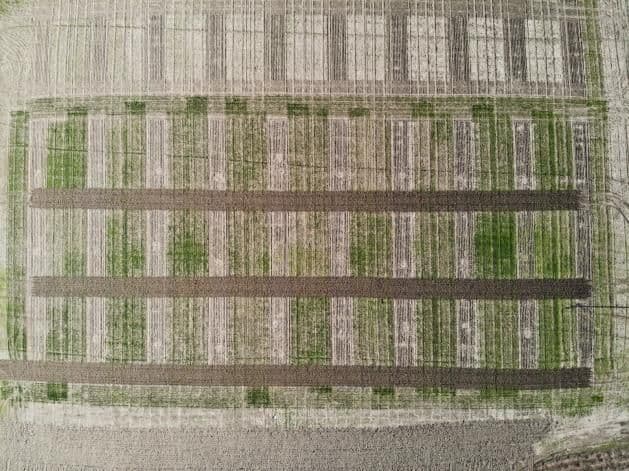
The second block, the late crop, was sown on 28 February 2025.
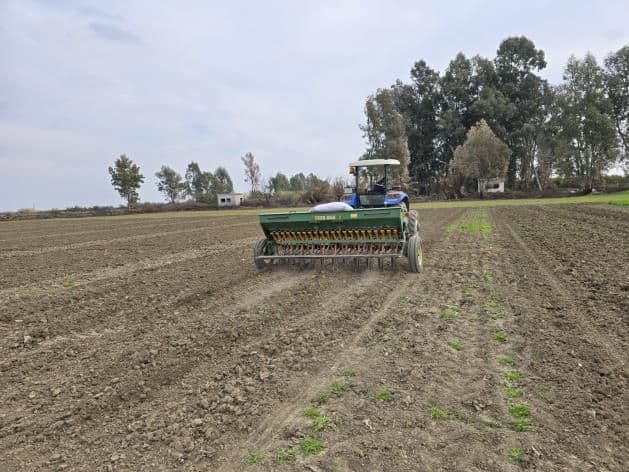
The team visited the field to assess crop growth and spot potential problems, and the crops were irrigated on 12 March.
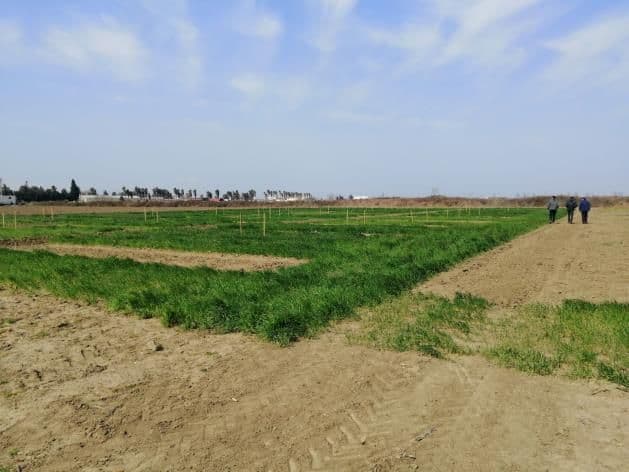
–
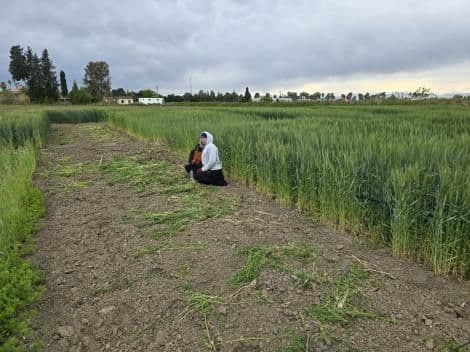
The strips between the plots were ploughed on 24 March. In early April, herbicide-resistant weeds had to be removed from every plot by hand, which took several working days.
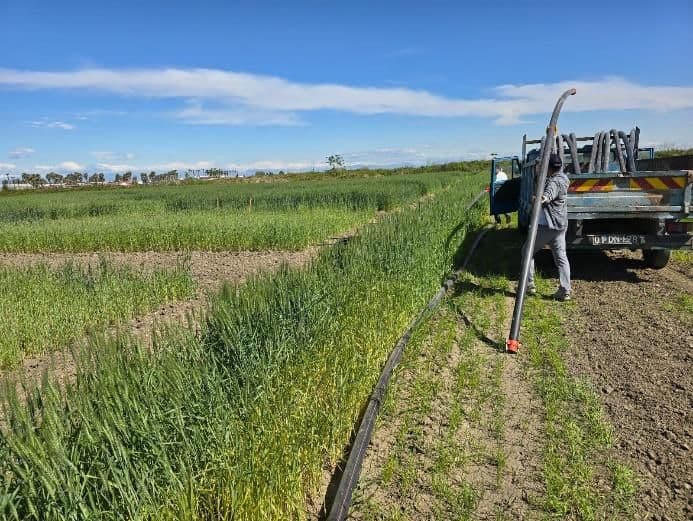
The irrigation system for the 0, 50 and 100% treatments was installed.
Experts assessed the growth of the early and late crops, and the team agreed the image pre-processing steps and the next acquisition dates.
Five flights with a multispectral drone over all 54 plots, ten spectral bands each. The images were mosaicked and corrected, then turned into NDVI and per-plot statistics.
Flight 1
Day 124 after early sowing
Flight 2
Day 127 after early sowing
Flight 3
Day 146 after early sowing
Flight 4
Day 174 after early sowing
Flight 5
Day 186 after early sowing
Mean NDVI of the 9 plots at each nitrogen level, per flight. Fertilised plots (10 and 20 g/m²) reached about 0.8 in mid-April and stayed close to each other; unfertilised plots stayed clearly lower. By mid-June every plot had ripened to about 0.1, the late block after a much shorter season.
| Flight | Block | Days after sowing | 0 g/m² N | 10 g/m² N | 20 g/m² N |
|---|---|---|---|---|---|
| Apr 15, 2025 | Early sowing | 124 | 0.58 | 0.84 | 0.83 |
| Apr 15, 2025 | Late sowing | 46 | 0.37 | 0.68 | 0.64 |
| Apr 18, 2025 | Early sowing | 127 | 0.55 | 0.81 | 0.80 |
| Apr 18, 2025 | Late sowing | 49 | 0.35 | 0.64 | 0.62 |
| May 7, 2025 | Early sowing | 146 | 0.35 | 0.64 | 0.63 |
| May 7, 2025 | Late sowing | 68 | 0.36 | 0.56 | 0.56 |
| Jun 4, 2025 | Early sowing | 174 | 0.29 | 0.24 | 0.25 |
| Jun 4, 2025 | Late sowing | 96 | 0.31 | 0.52 | 0.44 |
| Jun 16, 2025 | Early sowing | 186 | 0.16 | 0.10 | 0.10 |
| Jun 16, 2025 | Late sowing | 108 | 0.08 | 0.15 | 0.11 |
Each flight's images are stitched into a mosaic and corrected; thermal images and an elevation model come from the same flights.
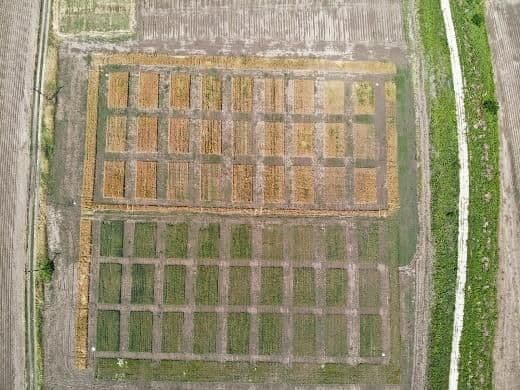
Raw multispectral mosaic of the field
Seven flights with a DJI Mavic 3M multispectral drone at 50 m over the same 54-plot design, from late winter to harvest.
Flight 1
Day 60 after early sowing · Before the late block was sown
Flight 2
Day 67 after early sowing · Before the late block was sown
Flight 3
Day 77 after early sowing
Flight 4
Day 108 after early sowing
Flight 5
Day 115 after early sowing
Flight 6
Day 132 after early sowing
Flight 7
Day 186 after early sowing
Çukurova's maps of the 54 plots for each 2026 flight. The plot numbers match the trial design; the early block is on the left (0–26), the late block on the right (27–53). The per-plot NDVI values for 2026 will be added once they have been reviewed with Çukurova University.
Red is growing vegetation: the redder the plot, the more vigorous the crop.
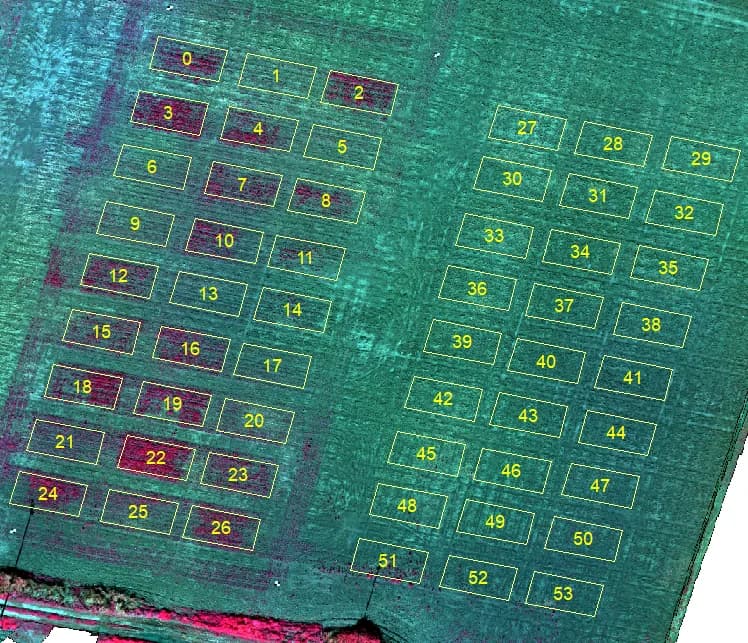
Early block (plots 0–26): day 60 · late block (27–53): 13 days before sowing
Weather: daily values for the field (36.855° N, 35.348° E) from the Open-Meteo historical archive (ERA5 reanalysis, CC BY 4.0). Wind at 10 m.